

Good Judgments:
An Interview with Sadhu Sundar Selvaraj
http://www.shen-guo.org/good-judgments-e.html
By Sloan Milliken
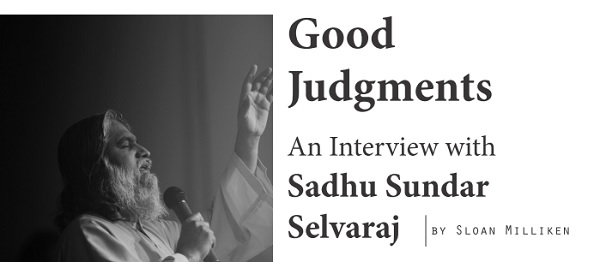
Sundar Selvaraj was born in India to staunch Hindu parents. After his father became a layman priest when Selvaraj was a young boy, he too became a devoted Hindu, giving himself to study and religious ceremonies. When he was sixteen, however, he had a profound encounter with the Lord Jesus after hearing the gospel at a religion and science lecture. Ever since, he has given himself to following Jesus faithfully.
The Lord has opened doors for Selvaraj, also known as Brother Sadhu, to speak for him all over the world. His ministry is marked by an evangelistic fervour, particularly for the unreached; messages that burn with prophetic insight; and signs, wonders, and miracles in the power of the Spirit.
I first heard of Brother Sadhu last summer as I watched recordings of a prophetic conference that took place in Lancaster, California. I was genuinely intrigued by what he would have to say as he spoke about the judgments of God. I was not disappointed. His message challenged me, comforted me, and provoked me to believe that God is worthy of trust in the good times and the bad.
I contacted Brother Sadhu so that he might share some of these things with us. Like he, I believe difficult days are ahead, and I feel a charge to be one who stands upon the goodness of the Lord in times when everything that can be shaken is shaken. Maybe I speak for just myself, but in our age of positive messages and “me and my personal relationship with Jesus” Christianity, we do not give much attention to topics like the judgments of the Lord, let alone consider what they may look like in our day. I hope that this interview not only gives you insight, but encourages you to seek God for revelation on these matters, for his judgments “are true and righteous altogether” (Ps 19:9).
Brother Sadhu, I have a real burden in my heart to better understand God’s goodness and see the Holy Spirit sharpen the Church’s understanding of it. When things are good, we gladly proclaim, “God is good.” And he is! He loves to give us good gifts. But when things go bad and tragedy strikes, it can be tempting to blame our Father and question (or just stop believing) that he is good. As we begin, can you please share about what it means for God to be good?
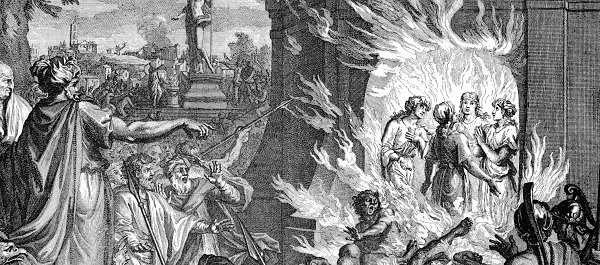
Your question is very simply answered in the incident mentioned in Daniel chapter 3.
Three Hebrew youths were about to be thrown into a fiery furnace for refusing to bow down and worship King Nebuchadnezzar’s 90-foot idol. The youths valiantly answered that their God, the Lord God of the whole universe, is able to help and save them. They added by saying with an absolute resolve that even if God does not save them, he is still a good God and the true God of the whole universe.

From this passage, it seems that their faith in God is not based on the good, luxurious, and prosperous things God provides in answer to prayers. Instead, their faith is based on the goodness of God—his unchanging, essential, and basic character, the goodness and glory that was so clearly revealed to the prophet Moses on Mount Sinai (see Ex 34:5-7).
Help us better understand the judgments of God. How can we see them in light of his love and goodness? What are some things we need to internalize, both in light of the season you feel is coming and in light of what the apostle John prophesied would happen at the end of the age?
The judgments of God are executed in mercy to meet his attribute that he is a just God. Remember, though, the real war is between God and the devil. The devil’s game plan is simple: he seeks to deceive and tempt man to fail and fall so that the God who is just will, in his justice, have to judge man. This ploy is clearly seen in Numbers chapters 22-25.
However, God’s judgments are redemptive. This truth is woven very beautifully all through the Bible. Does not the Bible say, “And you have forgotten the exhortation which speaks to you as to sons: ‘My son, do not despise the chastening of the Lord, nor be discouraged when you are rebuked by him; for whom the Lord loves he chastens, and scourges every son whom he receives.’ If you endure chastening, God deals with you as with sons; for what son is there whom a father does not chasten? But if you are without chastening, of which all have become partakers, then you are illegitimate and not sons. Furthermore, we have had human fathers who corrected us, and we paid them respect. Shall we not much more readily be in subjection to the Father of spirits and live? For they indeed for a few days chastened us as seemed best to them, but he for our profit, that we may be partakers of his holiness” (Heb 12:5-10).
Paul said, "It is NOT I That Lives"
It is not "I" that lives but Christ lives
in me (Galatians 2:20). It is not "Self" that lives but
"Christ" lives in me. It is not "Self" that lives but
"The Anointed One" - the One whose head/mind is anointed with the
"Oil of Understanding" - the oil that lubricates the
"seized-up" mind and gets it working again, understanding the TRUTH
or WORD of God. It was, or is, "seized-up" because "Self"
was, or is, jamming-up the works and blocking the channel through which the
Holy Spirit can flow to "lead you into all righteousness" and wash
you clean from inside, as it flows through you and then your "cup
overflows" to others, to wash them clean with the TRUTH and the Light of
understanding, that the now "working mind" receives in a Life united
with God, its supply of understanding; oil and Light. Then the Light of
understanding with its "shield of faith" (Ephesians 6) effortlessly
and painlessly conquers the fear and darkness of ignorance (given by Satan and
maintained by believing his lies) that lives in you. God thereby teaching you,
from within ("in-tuition"), to be like Him, so that you need no man
to teach you (1 John 2:27) because his "Self" will get in your way.
Matthew
5:48 Be ye therefore perfect, even as your Father Which is in heaven IS
perfect.
The judgments of God are redemptive, and they work towards sanctification and holiness. To be transformed back to the image of Christ Jesus and to be restored back to the likeness of God is the ultimate goal of redemptive judgment (2 Cor 3:18). So, every believer, realizing this ultimate goal, should learn to crucify our flesh and die to self daily. This will bring about the beauty that is required of the Bride of Christ.
Pictures are made to be put in an Art Gallery.
For when you go into an Art Gallery, you go to see
the picture, not the frame. It’s the picture that has the ability to tell the
stories. For when you examine the picture you must be able to see it clearly.
It must be up high on the wall, where all can see. You don’t hide it under a
bush or put it under a mattress, or bury it like a talent under the ground. It
must be exposed, or it can never tell a story. Like the eagles in the painting,
they were creating to abide high up, under the shadow of thee All-Mighty. To
make their nest upon the solid rock, as close as possible to the SON (sun).
Therefore, you are created for greatness and to
live on the word and to abide in the presence of the SON (sun) for ever. Amen
to that.
A TRIBUTE TO CATHERINE JENNIFER
BROWNE
Copyright © 1998-All Rights
reserved
Written By Matthew Browne
You and several other prophetic people you are associated with believe that very difficult times are on the horizon, that we are entering a period of the judgment of the Lord. Why do times like that come about?
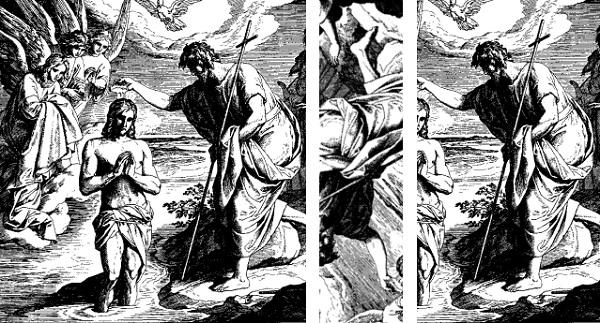
A careful look at the prophet John the Baptist’s ministry will answer this question. He was sent to prepare the way for the Lord Jesus to come. How did he do it? He cried out loudly against sin. He also spoke of judgments to come (Lk 3:1-20). Furthermore, the Bible says that God has begun to release his judgments upon the earth— they are another form of preparing the way for the Lord to come (Rev. 14:7). The cry is also against the church, where the judgments will first begin (1 Pet. 4:17).


The prophets of today are not saying something outside the Bible, but are merely elaborating upon and zeroing in on what the Bible has already said broadly and in general. For example, it is written, “…judgment to begin at the house of God” (1 Pet. 4:17). Why does this happen? The Holy Spirit is refining, pruning, cleansing, and sanctifying the Bride to meet the Bridegroom (Mal 3:2-3; Rev. 19:7-9). He will use prophets today to give specific encouragement and insight into what God is doing and is about to do.
The Scriptures are clear that our response to the Lord’s prophetic word can affect what happens. This is true for the good words, but also the bad. Jonah prophesied to the people of Nineveh that the city would be overthrown in 40 days, but they responded with widespread repentance and survived for many decades as a world power. We see similar things happen with Hezekiah and Josiah, where their response to a hard word affected what God did. Can you talk a little bit about this interplay between God and man? Also, do you feel like what is coming can be avoided or postponed?
Yes, sometimes it can be avoided or postponed, but some judgments will also definitely come to pass. However, the repentance and intercessory prayers of the saints can mitigate the judgments. God is still a good, compassionate, and merciful God. Consider what happened to Sodom and Gomorrah. Even though Abraham interceded for the twin cities, the judgment was still meted out. However, remembering Abraham’s intercessions, God provided for Lot and his family to be saved (Gen 19).
Brother Sadhu, as we close, I want to end on a note of hope, for God loves to remember mercy in judgment. You feel specifically called to prepare the Bride of Christ for his coming. How do you see God using his people in the times ahead?
Indeed God is love. He did not create man to punish him or destroy him. But man submitting himself to the devil, chooses to rebel against God. Even though God sends prophet after prophet, man still rebels against God. This will happen even in the end-times when people still refuse to believe in God during the powerful ministry of the Two Witnesses
Revelation 11:1 And there was given me a reed like unto a rod: and the angel stood,
saying, Rise, and measure the Temple of God, and the altar, and them that
worship therein.
11:2 But
the court which is without the Temple leave out, and measure it not; for it is
given unto the Gentiles: and the Holy City (Jerusalem) shall they tread under
foot forty [and] two months.
11:3 And
I will give [power] unto my Two Witnesses (Isa. 43:12), and they shall prophesy
a thousand two hundred [and] threescore "days", clothed in sackcloth.
(42 months of 30 "days" each = 1260 "days", each day for a
year - Num. 14:34; Ezekiel 4:6; Dan. 12:7).
11:4
These are the two "Olive" trees, and the two candlesticks (Ephraim
and Manasseh) standing before the God of the earth.
11:5 And
if any man will hurt them, fire (gun-fire which looked as though it) proceedeth
out of their mouth, and devoureth their enemies: and if any man will hurt them,
he must in this manner be killed.
11:6
These have power to shut heaven, that it "rain" (spiritually) not in
the days of their prophecy: and have power over "waters" (ch. 17:15)
to turn them to blood (reds), and to smite the earth with all plagues, as often
as they will.
11:7 And when they shall have finished their
Testimony (the 1260 "days" ended on 9/Dec./1917 - the day that
Jerusalem was liberated from Gentile domination by Israel - British forces -
Ezekiel 25:14), the beast (system - Satanic) that ascendeth out of the
Bottomless Pit shall make war against them, and shall overcome them, and KILL
them.
11:8 And
their dead bodies [shall lie] in the street of the Great City, which
spiritually is called Sodom and Egypt, where also our Lord was crucified
(Jerusalem).


Michael the Crown Prince of Heaven,
the (star) luminous-"Being of Light", who comes down to Earth and
takes on a human body (becomes a human+Being) and comes to Reign over and save
Gibraltar and "his Elect" / "Chosen".
Proof that this Golden Key IS the
Messiah/Mahdi's "Key to Heaven and Hell" is demonstrated symbolically
by The Key being shown, on the flag, linking the castle (Heaven) and the
red-ground (Earth/Hell). It is also The Key to the "Strait" Gate
(note well - NOT the straight gate) through which YOU must strive to RE-enter
heaven (the castle in the sky), or burn, just as you have been warned from the
beginning.
(Please see my Book "The
Way home or face The Fire").


God is raising a company of prophetic people who will live a life of holiness for him. They will be sent all over the world to prepare the way for the coming of the Lord and to call the Bride to prepare for him.
For more information on Brother Sadhu and his ministry, Jesus Ministries, please visit his
website at www.jesusministries.org.
Also, Brother Sadhu recommended a couple of books for anyone wanting more information on these topics: his e-book Judgment in the House of God and Raising a Company of Prophets by Vincent Selvakumar. You can find them online at the Jesus Ministries web-store.
 Sloan Milliken is learning to live as a son of his Father in heaven. He resides in Davidson, NC, where he owns a small house painting company. He enjoys playing music and rock climbing, and he puts his English degree to use by doing some editing on the side.
No comments:
Post a Comment